Black Wind Mountain in the Novel — What the Original Actually Says (Chapters 16–17)
Welcome to Black Wind Mountain. If you came here from the game, you have met the fire, the cassock and the Bear. This post is the whole affair as the novel tells it — Chapters 16 and 17 of Journey to the West — so you can check every answer in this zone against the source.
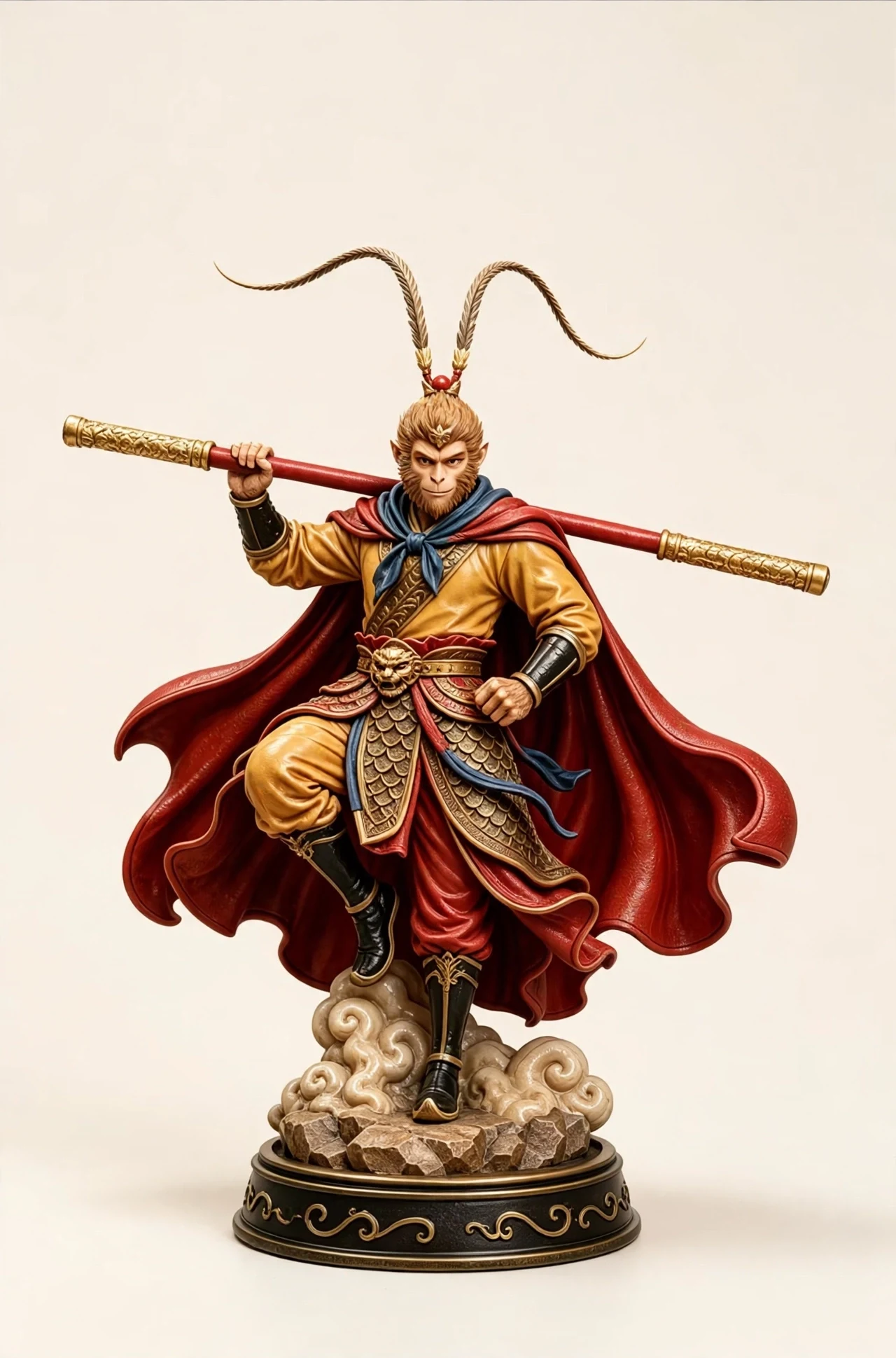
The monastery of cassocks. The pilgrims lodge at Guanyin Monastery, ruled by Elder Jinchi, a monk of two hundred and seventy years. Jinchi is a collector: he owns seven or eight hundred cassocks, and when the travellers arrive he has them all brought out and displayed by lamplight. Then Tripitaka's own cassock is unrolled — a gift from Guanyin herself, woven with pearls and Buddha-jewels — and the old man's greed wakes up. He keeps the pilgrims for the night, and his monks plan to burn them in their sleep and keep the treasure.
The fire turns around. Wukong hears the plot, borrows a fireproof coverlet from a Heavenly King to shield his master, and then — instead of putting the fire out — blows on it. The wind drives the flames back across the monastery, and Guanyin Monastery burns by the very fire its monks set. Elder Jinchi, ruined and shamed, dashes his head against a wall and dies. But in the smoke and confusion, someone else walks off with the cassock: the Black Bear of Black Wind Mountain, who had come to help fight the fire, saw the treasure glowing in the blaze, and stole it for a feast of his own — the Buddha-Garment Feast, with invitations sent to his two friends.
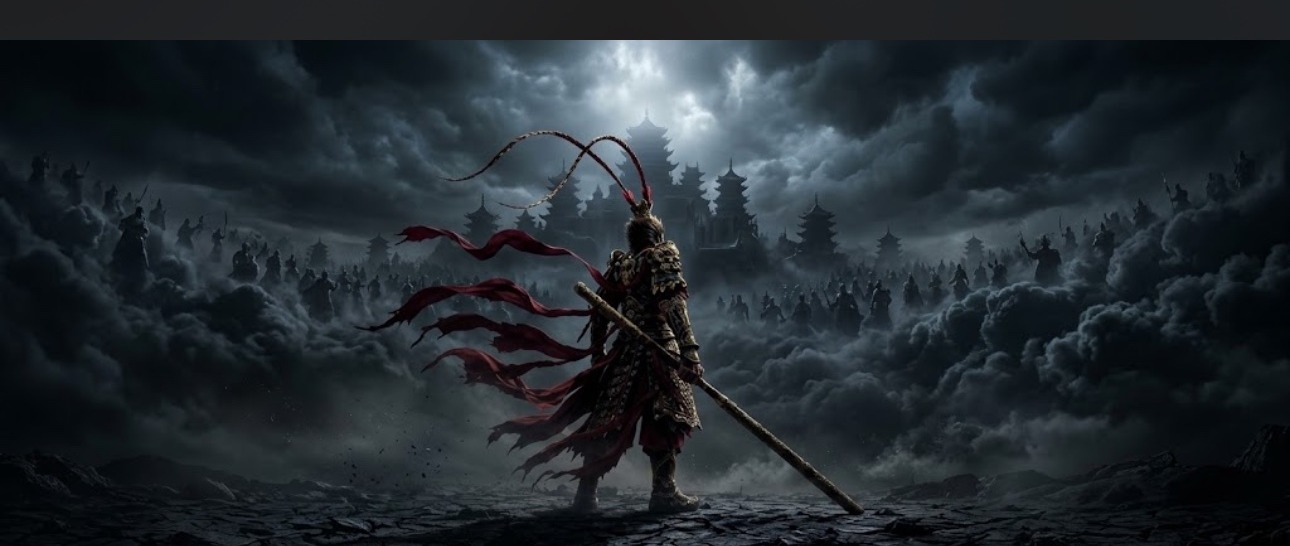
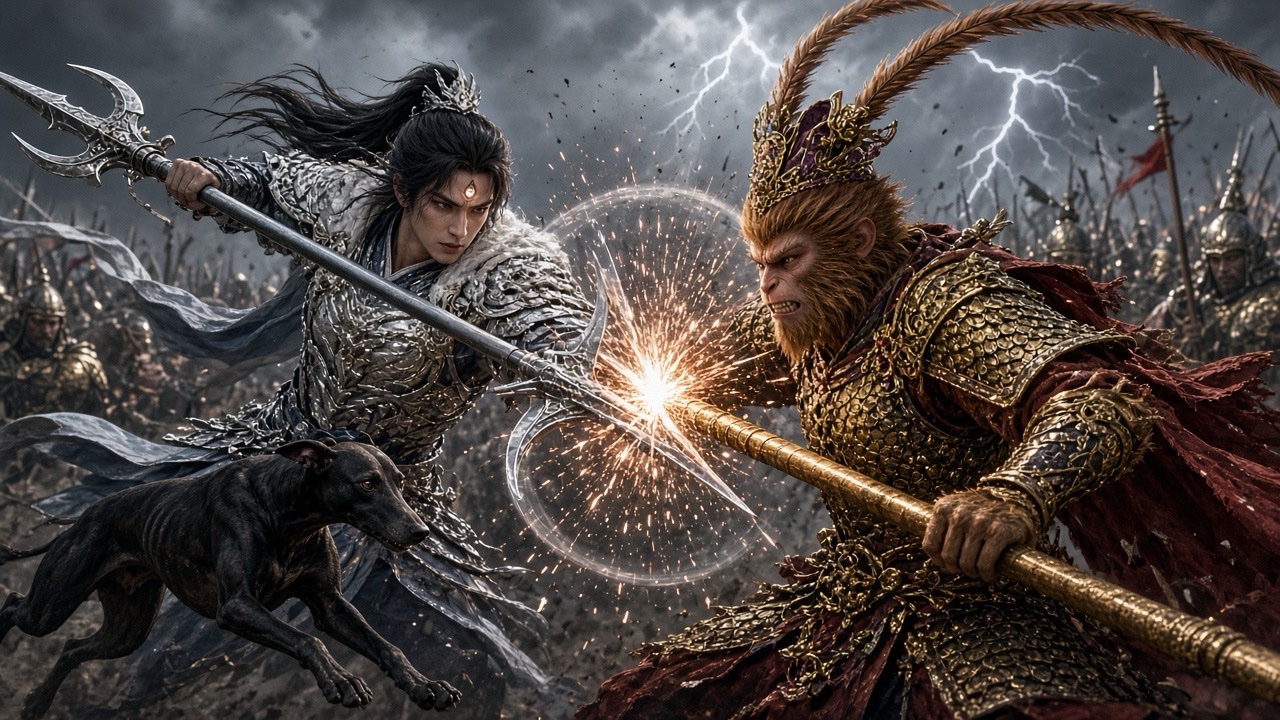
The opponent Wukong cannot beat. Wukong fights the Bear at his cave, and the novel is blunt about the result: they fight to nightfall with no winner. When Wukong appeals to Guanyin, she tells him the Bear's powers are "not inferior to yours." So the Bear is taken by wit, not strength. Guanyin disguises herself as the Bear's friend Lingxuzi, and Wukong transforms into an elixir pill, set among the gifts on the presentation tray. The Bear swallows the pill — and finds the Monkey King turning somersaults inside him. He surrenders the cassock and begs for his life.
And no, he does not die. Guanyin gives the Bear the precepts, sets a fillet band on him — a twin to the one Wukong wears — and takes him back to Mount Luojia, to serve as guardian god of her back mountain. The thief of the cassock ends the story employed by the goddess who gave it away.
Q — Is the Black Bear really as strong as Wukong?
Yes — and the novel says so outright. In Chapter 17 they duel from morning to nightfall without a decision, and Guanyin herself tells Wukong the Bear's powers are "not inferior to yours." The Bear is never beaten in a fair fight at all: he is taken by the elixir-pill trick. — Chapter 17
Q — Why does everyone want the cassock?
Because it is no ordinary robe. The cassock was Guanyin's gift to Tripitaka, worked with pearls and Buddha-jewels, and it protects the pilgrim who wears it. Elder Jinchi already owned seven or eight hundred cassocks — and was destroyed by wanting this one more. Coveting it is the whole cause of the fire. — Chapter 16
Q — Who are the Bear's two friends?
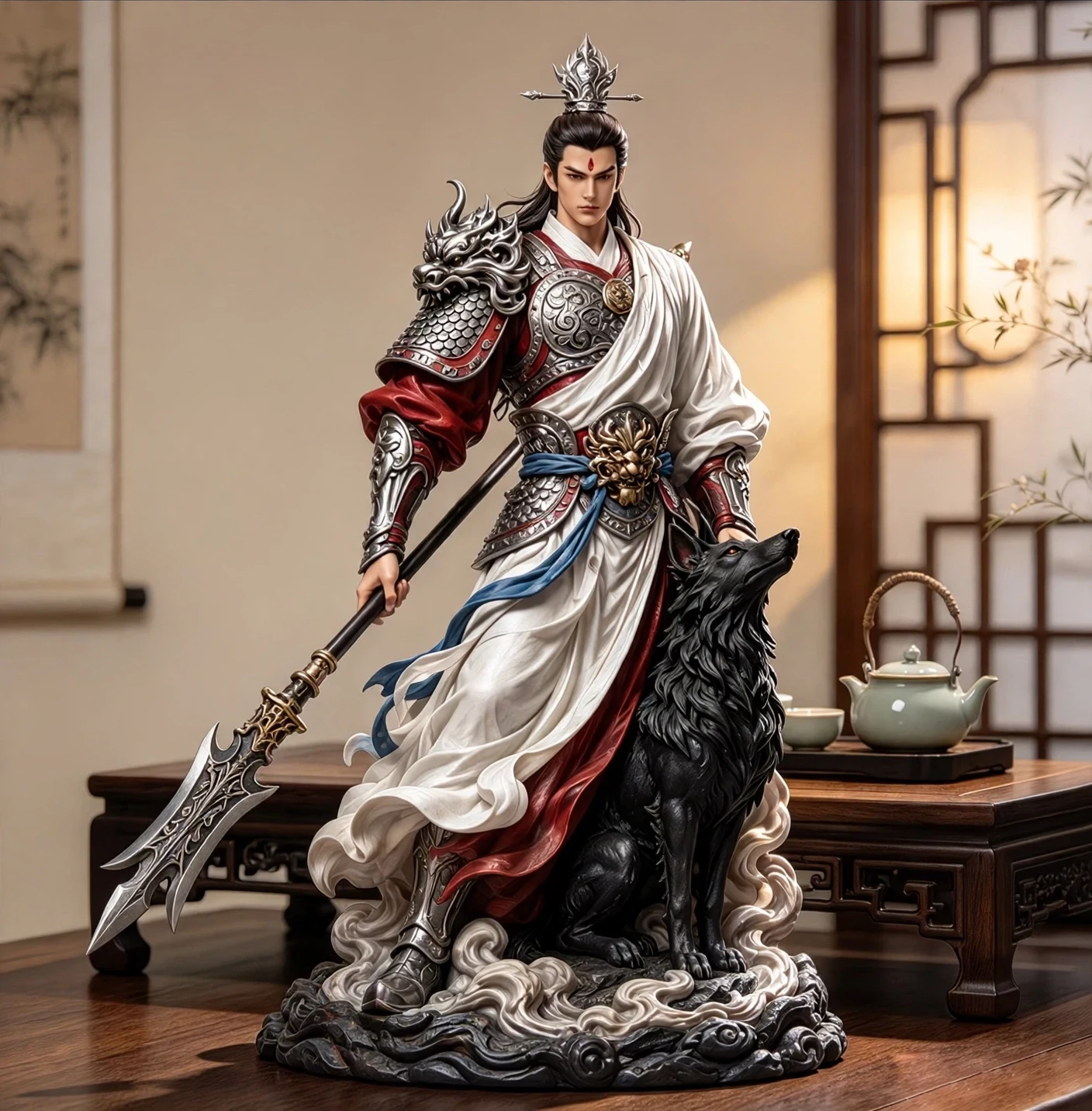
Lingxuzi, a grey wolf who has taken to the Daoist path, and a white-clad scholar who is, in truth, a white snake. Both are invited to the Buddha-Garment Feast. The detail matters later: when Guanyin comes to recover the cassock, she takes Lingxuzi's shape to walk into the Bear's cave unchallenged. — Chapters 16–17
Q — Does the Black Bear die?
No. He surrenders the cassock, accepts the precepts from Guanyin, and is taken back to Mount Luojia to serve as guardian god of her back mountain — alive, employed, and wearing a fillet band of his own, like Wukong's. — Chapter 17